Graffiti in the Heartland
This summer, I took my family to Mount Rushmore. Our loop of Americana included Devil’s Tower, Deadwood, Wall Drug, the Minuteman Missile National Historic Site, and the Badlands. Aside from preferring a bit cooler weather during the Badlands visit, we could not have asked for a better family trip.
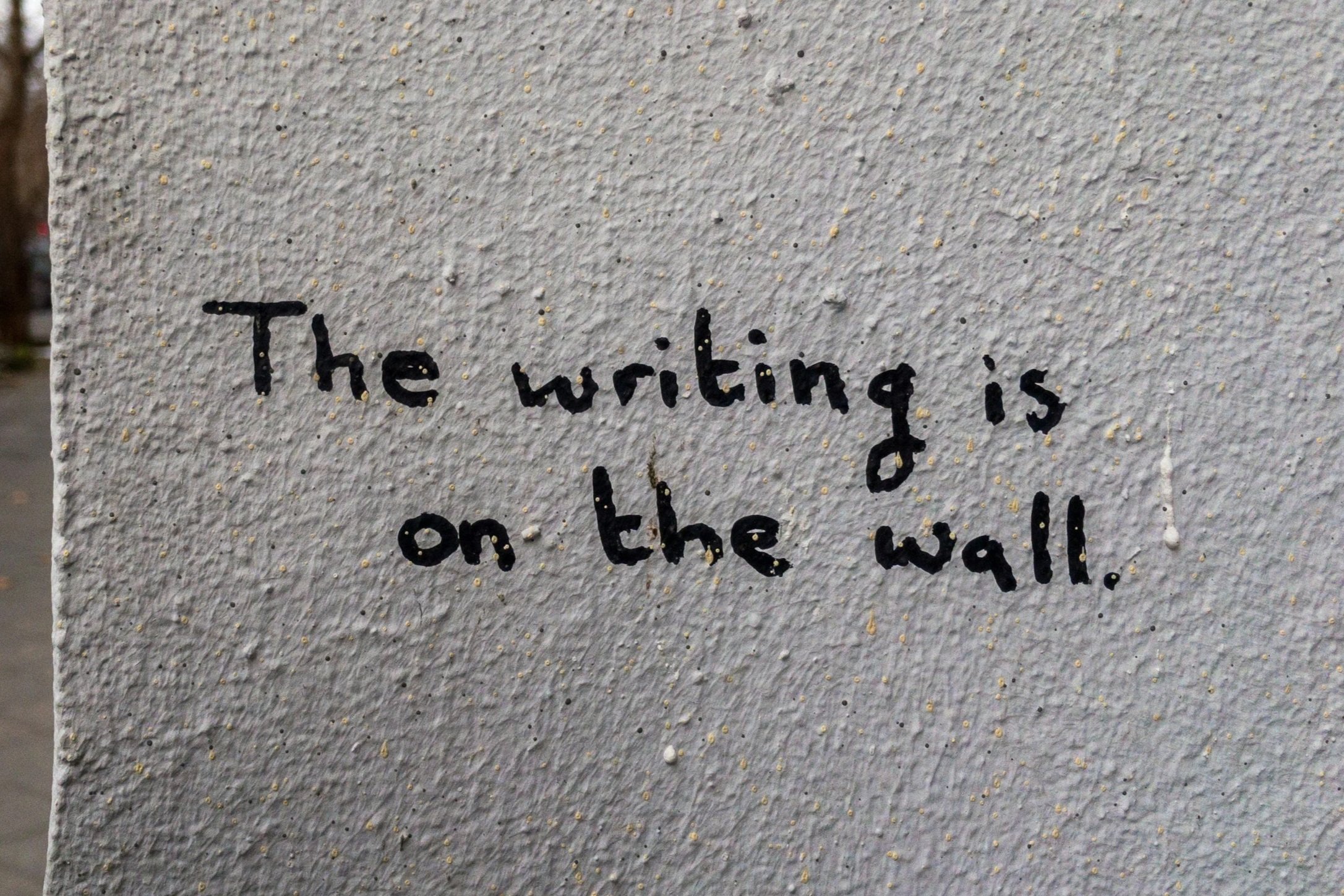
At one restaurant stop along the way, I saw a bit of sharpie graffiti on the wall of a restroom. In large letters, someone had scrawled, “Become Ungovernable.” As our trip continued, the words lingered in my mind as I thought about who might have written it and what their vision of becoming ungovernable actually looks like.
Because of our nation’s history, there has always been a certain defiant and revolutionary spirit in the United States. During the War of 1812, one British officer observed that “Self—the great ruling principle—[is] more powerful with Yankees than any people I ever saw.”[1] Individual rights are at the bedrock of the United States, so it is no big surprise to see defiant phrases like “Become Ungovernable.”
Yet because the League works toward the goal of “building better cities for a stronger Kansas,” I couldn’t quite shake the implications of a fellow citizen embracing such an idea. The objective of wise governance is strongly embedded in the League’s vision, which had me considering how we should respond to those who embrace a vision of ungovernability.
The term “ungovernable” has been around since the 1600s, and its definition focuses on that which cannot be controlled.[2] The phrase, “Become Ungovernable,” however, rose to prominence in Apartheid South Africa.[3] In a speech by Oliver Tambo, the leader focused on casting off the apartheid government by “rendering the country ungovernable.”[4] Since the 1980s, many varied groups have adopted the concept of becoming ungovernable by “delegitimizing and disrupting the functioning” of states by reasserting power through varied means of revolution.[5] So what does it mean to govern when the spirit of being ungovernable runs through both our past and present?
I recently finished reading John Quincy Adams: Militant Spirit, and our fifth president perpetually came back to the idea of the social compact.[6] Rousseau, Locke, and other Enlightenment Era thinkers popularized this idea,[7] and it shaped core ideals at the founding of the United States. Despite the Enlightenment influence, the idea of a social compact is far older than 1776. In a speech commemorating the Pilgrims landing at Plymouth Rock, he declared that “‘Man was not made for himself alone.’ The social compact binds the person to his country.”[8]
Adams’s summary is fitting based on the language in the Mayflower Compact that the Pilgrims agreed to combine themselves into a political body that would pursue order, preservation, and laws “for the general Good of the Colony.” These ideals being bound to one’s country and community may seem old fashioned, but they are critical to achieving a sustainable country and community. There has to be an element of being invested in “the general good of the colony” for it to persist.
Our nation—one born in revolution—has regularly had seasons where “it was in danger of being destroyed by the same distrust of authority with which it had begun.”[9] Yet even if we individually think it is absurd to adopt a become-ungovernable mindset, those in positions of governance need to be aware of and respond to the growing sentiment of distrust and disaffection.
When the disaffected show their feelings in counterculture ways, it can be easy to respond with derision or dismissiveness. But it should get our attention when someone has lost their trust in who we are as a nation. The thing about a compact—whether it’s the Mayflower Compact, the Social Compact, or whichever label you would assign to today—is that it includes the whole. Just being part of the majority or the group that is currently in power does not remove the responsibility to the whole. There is a responsibility to address the distrust in hope of making the whole complete. To do anything else violates the public trust that is so essential to governance.
While it tends to be the federal government that draws most of the ire and attention of the disaffected, we should not overlook the role of local government in building, maintaining, and even rebuilding public trust. Year after year, the Pew Research Center surveys Americans about their trust levels in government.[10] And year after year, local government scores the most favorable among each level of government.[11] From my vantage, this is unsurprising; I see up close the work that our local officials provide to turn cities into communities. But local officials cannot take that trust for granted.
When Lawrence Lowell charted the history of social compacts, he noted that the concept is largely a legal fiction.[12] As Americans, we don’t formally sign such an agreement—even though most of us live as though it exists. And it’s critical that we do! For if our collective sense of agreement and shared responsibility begins to wane, then civic life starts to fall apart. Lowell warned that if citizens sever their connection to the community, then the social compact gives way to lawlessness. Once trust is gone, only barbarism remains.
Lowell’s point emphasizes the fragility of public trust. If the compact erodes, people will look elsewhere for connection, for justice, for merely a place to be heard (even if it’s just graffiti on a bathroom wall). Whether or not we agree with the message, we should pay attention to what it implies: a fraying of the ties that bind us together. Local government cannot solve the ills of federal government, but it can model what trust looks like in practice. Often, it is local government that serves as the front line of public service, and it is an opportunity to build the public trust that is essential to keep the compact in place for us all.
[1] George C. Herring, From Colony to Superpower: U.S. Foreign Relations Since 1776 (New York: Oxford University Press, 2008), 129.
[2] Oxford University Press, Compact Oxford English Dictionary, 203].
[3] Shepard, Nikita. "Becoming Ungovernable: A Reassessment." Praxis 13/13 (blog), Columbia Law School, October 29, 2018. https://blogs.law.columbia.edu/praxis1313/nikita-shepard-becoming-ungovernable-a-reassessment/.
[4] Tambo, Oliver R. "Render South Africa Ungovernable! - Message of the National Executive Committee of the ANC on the 73rd Anniversary of ANC." African National Congress, January 8, 1985. Last modified June 10, 2019. https://www.sahistory.org.za/archive/render-south-africa-ungovernable-message-national-executive-committee-anc-73rd-anniversary.
[5] Shepard, "Becoming Ungovernable."
[6] Traub, James. John Quincy Adams: Militant Spirit. New York: Basic Books, 2016
[7] Lowell, A. Lawrence. "The Theory of the Social Compact: A Sketch of Its History." The Atlantic, June 1887.
[8] John Quincy Adams, Oration, Delivered at Plymouth, 1802, quoted in Traub, John Quincy Adams, 119).
[9] Philbrick, Nathaniel. Valiant Ambition: George Washington, Benedict Arnold, and the Fate of the American Revolution. New York: Viking, 2016.
[10] Pew Research Center. "Public Trust in Government: 1958-2024." Pew Research Center, June 24, 2024. https://www.pewresearch.org/politics/2024/06/24/public-trust-in-government-1958-2024/.
[11] Pew Research Center. "Americans Rate Their Federal, State and Local Governments Less Positively Than a Few Years Ago." Pew Research Center, April 11, 2024. https://www.pewresearch.org/short-reads/2024/04/11/americans-rate-their-federal-state-and-local-governments-less-positively-than-a-few-years-ago/.
[12] Lowell, "Theory of the Social Compact."